
Teaching Children to Love Animals: Why Early Introductions Matter
At Southeast Bully Kennels, we believe that strong bonds between children and animals begin early. One of the most important lessons a child can learn is how to feel safe, confident, and calm around dogs. These early experiences shape how children interact with animals for the rest of their lives—and how animals respond to them in return.
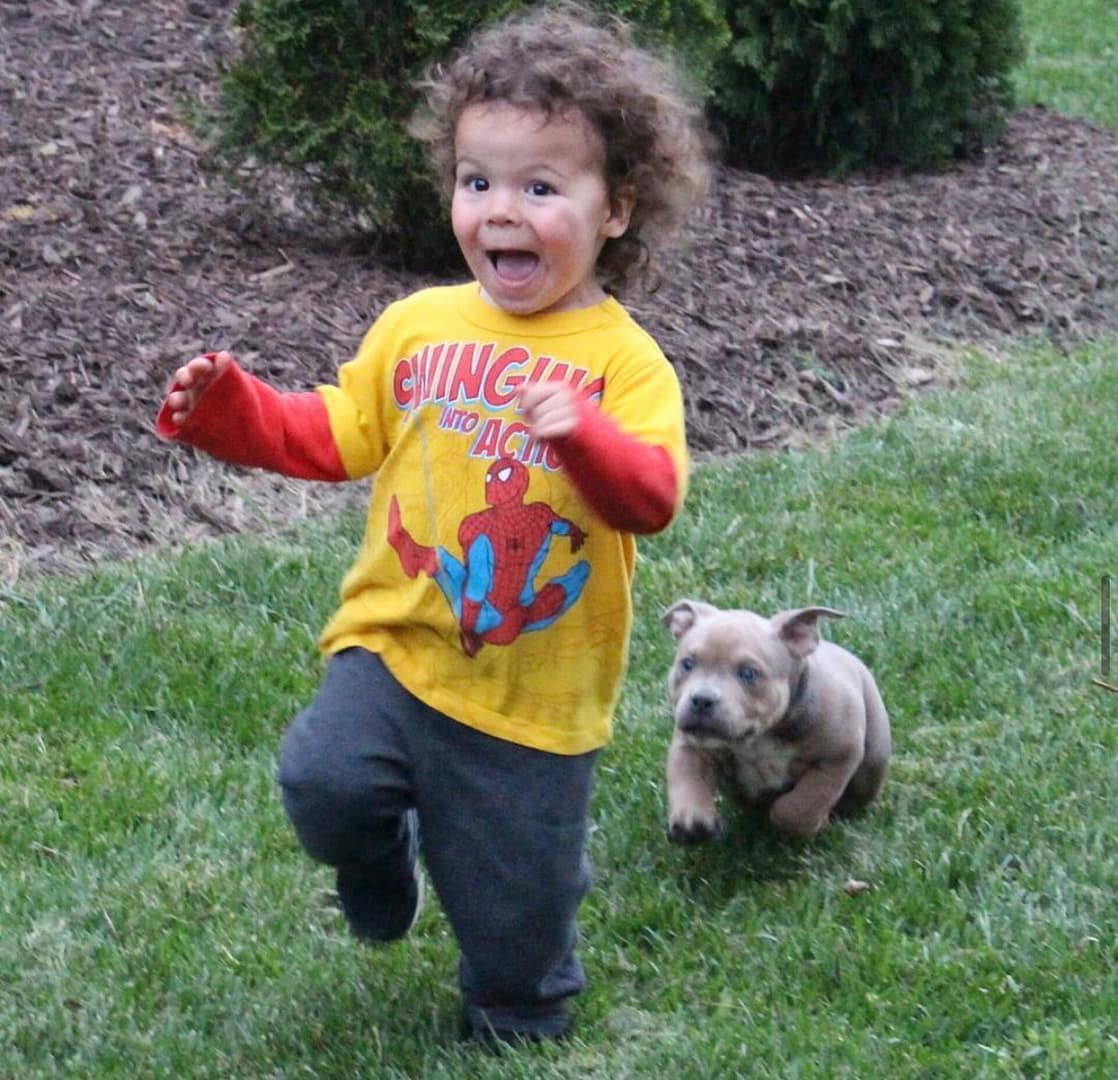
In the photo shared, a two-year-old little boy is running away while a puppy chases after him. The child looks frightened, while the puppy is clearly excited and playful. This moment is more common than many parents realize, and it highlights why education, supervision, and early exposure are so important.
Why Puppies Think Running Is a Game
Dogs, especially puppies, experience the world through movement and energy. When a child runs, squeals, or flails their arms, a puppy doesn’t see fear, they see play. Chasing is a natural instinct for dogs, and when a child runs away, it often triggers excitement rather than aggression.
This is why running from dogs, even friendly, well-socialized puppies—is not the best reaction. The dog may think the child wants to play, leading to more chasing, jumping, or playful nipping. Teaching children to stand still, stay calm, and use confident body language helps prevent misunderstandings and keeps both the child and the dog safe.
Teaching Children Confidence Around Dogs
Children don’t need to be fearless around animals, but they do need guidance. Fear often comes from the unknown. When kids are introduced to dogs early, especially calm, well-trained puppies they learn how to read behavior, respect boundaries, and respond appropriately.
Some important lessons we encourage include:
- Walking instead of running around dogs
- Using gentle hands when touching puppies
- Avoiding screaming or sudden movements
- Learning that dogs communicate through body language
These lessons build confidence, not just around pets, but in everyday life.
The Benefits of Introducing Children to Pets Early
Introducing children to pets at a young age offers lifelong benefits. Studies and real-world experience show that kids who grow up around animals often develop stronger empathy, emotional intelligence, and responsibility.
Children raised around dogs may benefit from:
- Improved emotional development and compassion
- Reduced anxiety and fear responses
- Better social skills and confidence
- A stronger sense of responsibility and routine
At Southeast Bully Kennels, we see firsthand how children and American Bullies grow together, forming bonds built on trust, respect, and love.
How We Train Puppies Around Children
Responsible breeding goes beyond structure and bloodlines it includes temperament and socialization. At Southeast Bully Kennels, our puppies are exposed to family environments, including children, from an early age. This helps them learn calm behavior, patience, and appropriate responses to kid energy.
We focus on:
- Early socialization with supervised child interactions
- Teaching puppies not to jump or chase excessively
- Building calm confidence instead of overstimulation
- Creating family-ready American Bullies
This approach helps ensure our puppies grow into well-balanced companions who thrive in family homes.
Teaching Respect Goes Both Ways
Just as dogs must be trained to respect children, children must be taught to respect dogs. Fear can often be replaced with understanding when kids learn that most puppies are not harmful—they are simply curious, playful, and eager to engage.
By teaching children how to behave around dogs and by raising puppies in family-centered environments, we create safer, happier experiences for everyone involved.
Building a Safer Future for Kids and Dogs
At Southeast Bully Kennels, our goal is to produce American Bullies that are not only structurally sound but emotionally stable and family-oriented. Educating parents and children is part of that mission.
Early exposure, proper supervision, and calm teaching moments can turn fear into confidence—and playful chaos into lifelong friendship.
