
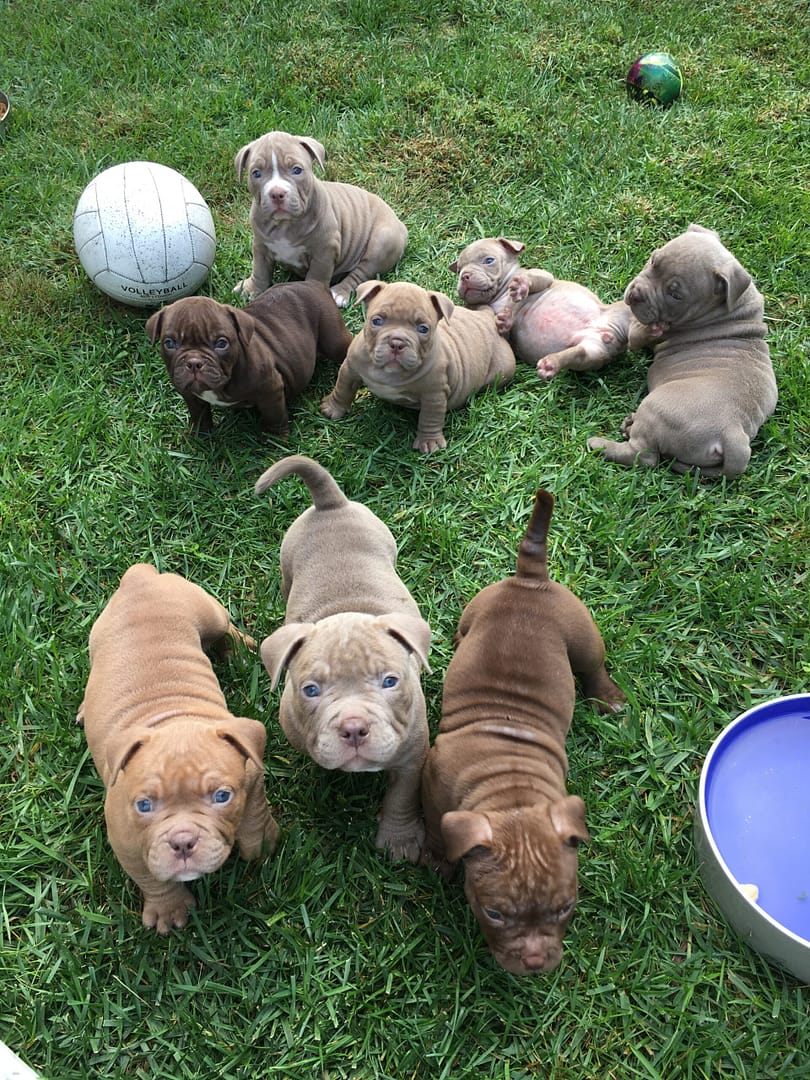
The Story Behind Our Puppy Training at Southeast Bully Kennels
At Southeast Bully Kennels, many people notice something unique in our puppy videos. When we interact with our puppies, you’ll often hear distinct clicking sounds made with the tongue.
Those sounds are not random, they come from a lifelong background in training dogs for the deaf community.
How It All Started
My journey with dogs began when I was 11 years old. Both of my parents are deaf, which meant I grew up closely connected to the deaf community.
Because of that connection, I started working with dogs for schools for the deaf and blind in the Carolinas. During those early years, I trained a variety of breeds including:
- Basset Hounds
- Chow Chows
- German Shepherds
- Mixed-breed rescue dogs
Many of these dogs were trained to assist people who relied on visual and tactile communication instead of sound.
This experience shaped the way I understand dogs, communication, and training even today.
Why Clicking Sounds Work So Well With Dogs
When training dogs for deaf individuals, verbal commands aren’t useful. Instead, trainers use distinct sounds or signals that dogs can easily recognize.
One of the most effective cues is a sharp clicking sound made with the tongue.
Dogs respond incredibly well to these sounds because:
- The sound is short and consistent
- It grabs the dog’s attention quickly
- It becomes a clear communication marker
- It works even at a distance
Over time, dogs learn that the click means:
- Pay attention
- Come toward the handler
- Focus on what is happening
Why We Still Use These Training Techniques Today
Even though today we specialize in raising and breeding pocket bullies and micro bullies, the foundation of our puppy training still comes from these early techniques.
At Southeast Bully Kennels, we start working with our puppies early so they become responsive and attentive to human interaction.
You’ll notice in our videos that we use those same clicking sounds when interacting with our puppies.
This helps the puppies:
- Recognize human cues faster
- Build strong focus and attention
- Respond consistently to their handlers
- Develop early communication skills
A Training Advantage for New Owners
One of the most interesting parts of this training method is that our puppies remember these sounds even after they go to their new homes.
Many families who get a puppy from Southeast Bully Kennels can simply play our videos where the clicking sounds are used.
Often the puppy will immediately:
- Look toward the sound
- Become attentive
- React the same way they did while they were here with us
It’s a simple but powerful connection that carries over into the puppy’s new life with their family.
A Foundation Built on Real Experience
The training foundation at Southeast Bully Kennels didn’t start with social media or modern dog trends.
It started decades ago with a young kid learning how to communicate with dogs in a way that helped people who couldn’t rely on hearing.
Those early lessons shaped the way we raise and interact with every puppy today.
When you see our puppies responding to those small clicking sounds, you’re seeing a training method built from real experience with the deaf community and working dogs.
And it’s one of the many reasons our puppies transition so smoothly into their new homes.
At Southeast Bully Kennels, our decades of experience with dog training and the deaf community continue to influence how we raise and train our pocket bully puppies and micro bully puppies today.
